
Last updated: October 2026.
How much do lip fillers cost? Typically $500 to $1,000 per syringe, and most patients need one or two. Your own total comes down to three things: which product goes in, how many syringes the result takes, and the experience of the person injecting.
Whether you want to restore volume lost to aging, correct asymmetry, soften lip lines, or enhance what you were born with, lip fillers deliver visible results with little downtime, and an appointment can be finished in under an hour. Below is what moves the price, how the brands differ, what other filler areas cost, and what the FDA actually approves fillers to do. For treatment itself, see our Botox and dermal fillers in Midtown Manhattan.
How Much Do Lip Fillers Cost?
Lip filler pricing typically ranges from $500 to $1,000 per syringe. A standard treatment uses one syringe (1 mL) of hyaluronic acid filler, which is enough for most patients seeking a natural enhancement. Patients who want more dramatic volume, or who are treating both the lips and the surrounding lip lines, may need a second syringe.
New York City pricing sits toward the higher end of the national range, which reflects the local cost of living, the premium on experienced injectors, and the use of top-tier filler brands. Expect to pay more in Manhattan than in most of the country for the same syringe.
Here is a general overview of what to budget:
| Treatment | Estimated Cost | Notes |
|---|---|---|
| 1 syringe of lip filler | $500-$1,000 | Enough for subtle to moderate enhancement in most patients |
| 2 syringes of lip filler | $1,000-$2,000 | For more dramatic volume, or treating both lips and perioral lines |
| Lip flip (Botox) | $100-$200 | Botox technique for subtle upper lip enhancement without volume |
| Lip filler plus lip flip | $600-$1,200 | Combined approach for added definition and volume |
Your own pricing is confirmed at consultation. New clients receive 20% off their first treatment.
On This Page
- How Much Do Lip Fillers Cost?
- What Factors Affect Lip Filler Cost?
- Lip Filler Brands Compared
- Dermal Filler Cost for Other Areas
- What Are Lip Fillers?
- The Lip Filler Options
- Lip Flip vs. Lip Filler
- Am I a Good Candidate?
- What to Expect at Your Appointment
- Is There Downtime After Lip Fillers?
- How Long Do Lip Fillers Last?
- Are Lip Fillers Safe?
- How to Choose a Provider
- Combining Lip Fillers With Other Treatments
- Payment Options and Financing
- Frequently Asked Questions
- Sources
Key Takeaways
- Lip fillers typically cost $500 to $1,000 per syringe. Most patients need one to two syringes.
- Several brands are available, including Juvéderm Volbella, Juvéderm Ultra, Restylane Kysse, Restylane Silk and Belotero, each suited to different goals.
- Downtime is minimal. Mild swelling and bruising usually resolve within a few days.
- Results last 6 to 12 months on average, depending on product and metabolism.
- Hyaluronic acid fillers are reversible with hyaluronidase. Biostimulatory fillers are not.
- Fillers are approved for people aged 22 and older, and the FDA names accidental injection into a blood vessel as the most serious risk.
What Factors Affect Lip Filler Cost?
Understanding why pricing varies helps you make an informed decision and avoid the risks that come with unusually cheap treatment. Five variables account for most of the difference.
1. Filler Brand and Formulation
Different brands and product lines carry different price points. Premium products like Juvéderm and Restylane cost more than lesser-known alternatives, and they are FDA-approved with extensive safety data behind them. The specific formulation within a brand matters too. Products designed for delicate tissue like the lips are more refined and priced accordingly.
2. Number of Syringes Required
More product means a higher total. Most patients start with one syringe and assess before adding more. First-time patients are usually advised to start conservatively and build volume gradually across appointments, which produces the most natural outcome.
3. Provider Experience and Credentials
Injector expertise is the most underestimated cost factor. Lip injections demand precise anatomical knowledge and an artistic eye. Experienced, physician-supervised injectors charge more because their training and judgment translate directly into better results and lower risk. Bargain-priced fillers are frequently associated with undertrained providers, diluted product, or unsafe settings.
4. Where the Practice Is Located
A high-end medical spa in Midtown carries different overhead than a provider in an outer borough or a New Jersey suburb. For a procedure this technique-sensitive, though, proximity to a skilled full-service provider who can manage follow-up or a complication is part of what you are paying for.
5. Additional Treatment Areas
Some patients combine lip filler with treatment of the perioral lines, the nasolabial folds, or a Botox lip flip in the same appointment. Combining can be efficient and cost-effective, though it raises the total for that session.

Lip Filler Brands Compared
Below is a general reference for the common lip filler brands available in New York, and their characteristics. Exact pricing is given at your consultation.
| Filler Brand | Best For | Duration | Reversible? |
|---|---|---|---|
| Juvéderm Volbella® XC | Subtle lip enhancement, lip line smoothing | Up to 12 months | Yes (HA) |
| Juvéderm® Ultra XC | Fuller volume, lip definition | 6 to 12 months | Yes (HA) |
| Restylane® Kysse | Natural-feeling volume and movement; approved for lips and perioral lines | 9 to 12 months | Yes (HA) |
| Restylane® Silk | Subtle shaping, fine lines around the mouth | 6 to 9 months | Yes (HA) |
| Belotero Balance® | Superficial lip lines, delicate areas | 6 to 12 months | Yes (HA) |
Every product in that table is hyaluronic acid based, which means it is biodegradable and reversible. Restylane Kysse is worth singling out because it carries an FDA indication written specifically for this area: it is injected “into the lips and the lines around the upper lip to temporarily add fullness to the lips” and to smooth perioral lines in patients over 21. The clinical study behind it followed patients for 12 months.
How Much Do Dermal Fillers Cost for Other Areas?
Lips are the most requested filler area, not the only one. The FDA lists approved uses including “increasing fullness of lips, cheeks, chin, under-eye hollows, jawline, and back of the hand,” so the pricing logic extends well beyond the mouth.
Hyaluronic acid fillers are priced per syringe, so the cost of any area comes down to how many syringes it needs. That is mostly a function of how much volume is being replaced.
| Area | Typical syringes needed | Why |
|---|---|---|
| Lips | 1, sometimes 2 | Small volume, high precision |
| Under-eye hollows (tear troughs) | 1 for both sides | Thin skin, very conservative dosing |
| Nasolabial folds | 1 to 2 | Linear correction rather than volume building |
| Cheeks and midface | 2 or more | Larger area, structural volume replacement |
| Jawline and chin | 2 or more | Contouring a long border needs more product |
A second distinction matters more than most pricing pages admit. Not all fillers are hyaluronic acid.
- Hyaluronic acid fillers (Juvéderm, Restylane, Belotero) add volume immediately and dissolve with hyaluronidase if you want them gone.
- Biostimulatory fillers such as Sculptra (poly-L-lactic acid), Radiesse (calcium hydroxylapatite) and Bellafill work by prompting your own collagen. Results build over weeks to months and last longer, and they are priced per vial across a planned course rather than per single syringe.
The trade-off is reversibility. Biostimulators cannot be dissolved with hyaluronidase, which is why they are rarely a first choice for the lips and why the conversation about which product goes where is worth having properly.
What Are Lip Fillers?
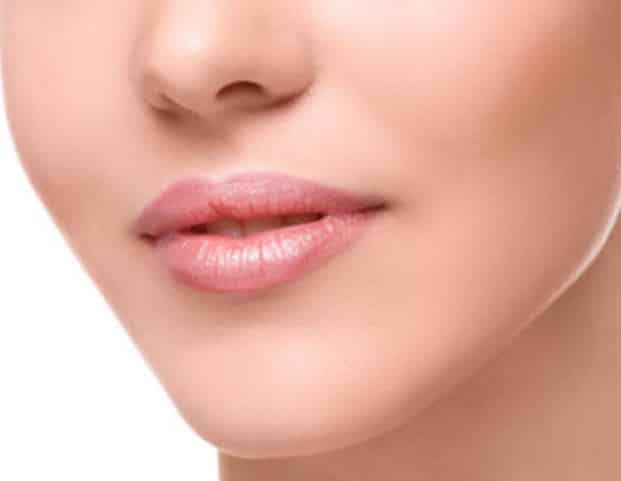
Lip fillers are injectable treatments that add volume, improve shape, and define the lips. Most are made from hyaluronic acid (HA), a sugar molecule found naturally in the body that attracts and holds moisture. HA fillers integrate smoothly with tissue, feel natural, and can be adjusted or reversed after treatment, which makes them well suited to lip augmentation.
Beyond adding volume, lip fillers can:
- Improve lip symmetry, correcting uneven upper and lower lips
- Define the cupid’s bow and the lip border
- Smooth vertical lip lines, also called perioral lines
- Add subtle projection to a flat upper lip
- Restore volume lost to natural aging
- Balance the proportion between the lips and the rest of the face
Lip augmentation is one of the most nuanced injectable procedures. Small differences in placement, depth and volume separate a natural result from an overfilled one, which is why injector experience matters as much as it does. For more on product selection, see what’s the best injectable for lip volume.
The Lip Filler Options
For lip enhancement specifically, our providers select from the following products based on your goals and anatomy.
Juvéderm Volbella® XC
Volbella uses Vycross technology, producing a thinner, smoother gel suited to delicate lip tissue. It adds subtle volume and smooths vertical lip lines with a natural feel, and it is a common choice for patients who want refinement without obvious augmentation. Results can last up to 12 months.
Juvéderm® Ultra XC
A slightly thicker formulation that delivers more noticeable volume and definition, Ultra XC suits patients who want fuller lips and a more obvious result. Lidocaine in the formula makes the injection more comfortable. Results typically last 9 to 12 months.
Restylane® Kysse
Kysse was developed for lip augmentation and perioral lines, and it holds an FDA indication written for exactly that. Its XpresHAn Technology allows natural lip movement, so lips look and feel normal when speaking, smiling and eating. Results generally last 6 to 12 months.
Restylane® Silk
Silk uses smaller, smoother hyaluronic acid particles, which suits subtle lip shaping and fine lines around the mouth. It is often the choice for patients who want a very natural result or who are new to lip filler. Results last roughly 6 to 9 months.
Belotero Balance®
Belotero integrates into the superficial layers of skin, making it effective for the fine vertical lines above the upper lip. It also works for very subtle lip enhancement. Results typically last 6 to 12 months.
Alongside these, we offer a full range of injectable treatments for the face and body, including Botox®, Dysport® and Xeomin®, plus volume-restoring options like Juvéderm Voluma® and Sculptra®.
Lip Flip vs. Lip Filler: What Is the Difference?
Two of the most popular lip enhancement options are the lip flip and lip filler. Patients often ask which is better, and the answer depends entirely on the goal.
| Lip Flip (Botox) | Lip Filler (Hyaluronic Acid) | |
|---|---|---|
| How it works | Botox relaxes the orbicularis oris, so the upper lip rolls slightly outward | HA filler physically adds volume and shape |
| Result | Upper lip appears slightly fuller; no added volume | Visible increase in volume, definition and shape |
| Best for | Subtle enhancement, or a gummy smile | Visible volume, better symmetry, lip line definition |
| Duration | 2 to 3 months | 6 to 12 months |
| Cost | $100–$200 | $500–$1,000 per syringe |
| Reversible? | No, it wears off naturally | Yes, dissolve with hyaluronidase |
Many patients combine the two, using filler for volume and the lip flip to shape the upper lip. For how neuromodulator dosing works, see our guide to Botox units and dosing.
Am I a Good Candidate for Lip Fillers?
Lip fillers suit a wide range of adults. Fillers are approved for people aged 22 and older. Good candidates are typically those who:
- Are in good general health
- Want to add volume to naturally thin lips
- Have noticed lip volume decreasing with age
- Would like better lip symmetry or border definition
- Want to soften vertical lines around the mouth
- Are curious about a subtle, reversible first treatment
Postpone treatment if you have an active cold sore, a skin infection, or an open wound in the area. Tell your provider about any history of cold sores, since an antiviral before the appointment is often recommended as a precaution. Patients who are pregnant or breastfeeding should wait.
What to Expect During Your Lip Filler Appointment
Before Your Appointment
To limit bruising, avoid blood-thinning medications such as aspirin, ibuprofen and fish oil supplements for several days beforehand, with your prescriber’s agreement where relevant. Arriving with a clean face and no lip products speeds up the prep.
During the Appointment
Topical numbing cream goes on the lips and surrounding area 15 to 20 minutes before injections begin. Most hyaluronic acid fillers also contain lidocaine, which reduces discomfort further. The injections themselves take 15 to 30 minutes, and your injector will shape and assess symmetry throughout.
After the Appointment
Lips look swollen immediately afterwards, which can make the result appear more dramatic than it will be once everything settles at the one to two week mark. An ice pack helps. Most patients return to their day right away, and settled results are usually visible within 7 to 14 days.
Is There Downtime After Lip Fillers?
There is no significant downtime, though there are side effects worth planning around. The common ones:
- Swelling. The most noticeable effect, typically peaking at 24 to 48 hours and subsiding over the following few days.
- Bruising. Minor bruising at injection sites is possible and usually fades within 5 to 7 days. Lip-safe makeup covers it.
- Redness or tenderness. Mild, and generally gone within a few hours to a day.
- Small irregularities. Mild bumpiness right after injection usually smooths out as swelling resolves, and your injector can massage anything that persists.
For the first 24 hours, avoid strenuous exercise, alcohol, excessive sun, and pressure or massage on the lips.
How Long Do Lip Fillers Last?
Most hyaluronic acid lip fillers last 6 to 12 months, though the exact duration depends on the product, the amount injected, and how quickly your body breaks it down. Because the lips move constantly, filler there tends to metabolise somewhat faster than filler placed in the cheeks.
Factors that affect duration:
- Metabolism. Faster metabolisms may break filler down more quickly.
- Product choice. Thicker, more cross-linked products may outlast finer formulations.
- Volume injected. More product generally takes longer to metabolise fully.
- Lifestyle. UV damage and smoking accelerate the breakdown of filler and of skin generally.
Touch-ups every 6 to 9 months are a common way to hold volume steady through the year. The FDA is clear that most approved fillers are temporary and that the procedure may have to be repeated to maintain the effect.
Are Lip Fillers Safe?
Administered by trained injectors in a proper medical setting, lip fillers have a strong safety record. The hyaluronic acid fillers we use are FDA-approved, and HA occurs naturally in the body, so the risk of allergic reaction is low.
Being straight about the serious risk matters more than reassurance. The FDA names accidental injection into a blood vessel as the most serious risk associated with dermal fillers, and states that filler entering a vessel “can cause skin necrosis (death of tissue), stroke, or blindness.” Those events are rare. They are also the reason the lips, a densely vascular area, are not a place to economise on who holds the syringe.
The reversibility of HA filler is a genuine safety advantage. If you are unhappy with the result, or in the event of a complication, hyaluronidase dissolves HA filler quickly. Biostimulatory fillers do not have that escape route.
Three pieces of FDA guidance are worth repeating plainly. The agency advises working with a licensed health care provider experienced in injecting dermal fillers. It warns against buying or using lip or facial fillers sold directly to the public. And it has not approved any needle-free device for injecting dermal fillers, which rules out the hyaluron-pen style treatments sometimes offered outside medical settings.
Related reading: which dermal filler is best.

How to Choose a Lip Filler Provider
New York City has no shortage of providers offering lip filler, from dermatology practices to medspa chains to beauty spas adding injectables as a sideline. Here is what to check.
Physician Oversight
Choose a practice where injections are performed or directly supervised by a licensed physician. At our Murray Hill practice every injectable treatment is physician-supervised, which is what puts clinical judgment on hand if something needs managing.
Injector Experience and Training
Ask about the injector’s specific training in facial anatomy and injectable technique. Review before and after photos of real patients, ideally some with a starting point similar to yours.
Quality of Products Used
Confirm the practice uses authentic, FDA-approved, brand-name filler. Counterfeit and diluted product is a real risk in unregulated settings, and it is exactly what the FDA’s warning about fillers sold direct to the public is about.
Consultation Process
A reputable provider offers a proper in-person consultation before treatment, rather than a quick glance before injecting. That appointment is where anatomy gets assessed, goals get discussed, medical history gets reviewed, and expectations get set.
Transparent Pricing
Upfront pricing signals a trustworthy practice. Be cautious of vague pricing, heavy upselling, or deals dramatically below market rate, which usually mean less product, less experience, or both.
Combining Lip Fillers With Other Treatments
Lip filler pairs well with several complementary treatments. Common combinations:
Lip Fillers and Botox
Adding a Botox® lip flip, or treating perioral lines, rounds out the lower face. Forehead lines and crow’s feet can be handled in the same visit.
Lip Fillers and Cheek Fillers
Restoring midface volume with Juvéderm Voluma® or Sculptra® alongside lip enhancement produces a more balanced result. Treating the cheeks also has a mild lifting effect that softens the nasolabial folds.
Lip Fillers and Nasolabial Fold Treatment
The creases running from the nose to the corners of the mouth soften with Juvéderm Vollure™ XC or Restylane®, which complements lip work.
Lip Fillers and Skin Treatments
Pairing injectables with skin quality treatments such as a HydraFacial®, a chemical peel or Vivace® RF Microneedling improves texture and tone, so filler results sit against a smoother canvas.
Payment Options and Financing
Aesthetic treatment is an investment, and we try to make it manageable for patients across New York City and the surrounding area. We offer 0% interest-free financing through our payment partners, which spreads the cost over time without added interest.
There is also a membership and rewards program for regular patients, and new clients receive 20% off their first treatment. Current specials and promotions are listed separately.
Frequently Asked Questions
How much do lip fillers cost?
Lip filler costs typically range from $500 to $1,000 per syringe. Most patients need one to two syringes to achieve their desired result. Total cost depends on the brand of filler used, the number of syringes required, and the expertise of the injector.
How much do dermal fillers cost for other areas?
Most hyaluronic acid fillers are priced per syringe, so the cost of treating cheeks, chin, jawline or under-eye hollows comes down to how many syringes the area needs. Lips usually take one. Cheeks and jawline commonly take two or more per side, because the volume being replaced is larger. Biostimulators are priced per vial and dosed across several sessions.
How long do lip fillers last?
Most hyaluronic acid lip fillers last between 6 and 12 months. Results vary depending on the product used, the amount injected, and how quickly your body metabolizes the filler. The clinical study behind Restylane Kysse followed patients for 12 months after treatment.
What is the best lip filler brand?
The best lip filler depends on your anatomy and goals. Juvederm Volbella XC is popular for subtle volume and smoothing lip lines. Juvederm Ultra XC is preferred for more dramatic volume. Restylane Kysse is approved specifically for the lips and perioral lines, and is known for natural movement. Your provider will recommend an option at your consultation.
Does getting lip fillers hurt?
Most patients experience minimal discomfort during lip filler injections. Most filler formulations contain lidocaine, a local anesthetic, built into the product. Additionally, topical numbing cream is applied before treatment. Most patients describe the sensation as a mild pinch or pressure that passes quickly.
Is there downtime after lip fillers?
No significant downtime is required after lip fillers. You may experience mild swelling, redness, or bruising for a few days following your appointment. Most patients return to their normal activities right away. Avoiding strenuous exercise, alcohol, and excessive sun for the first 24 hours is recommended.
How many syringes of lip filler do I need?
Most patients achieve their desired result with one syringe (1 mL) of lip filler. Some patients who want more dramatic volume or are treating both the lips and surrounding areas may need two syringes. Your injector will assess your anatomy and goals during a consultation to determine the right amount for you.
Are lip fillers safe?
Hyaluronic acid lip fillers are FDA-approved and have a strong safety record when administered by trained injectors in a medical setting. The FDA names accidental injection into a blood vessel as the most serious risk, which can cause skin necrosis, stroke or blindness. That risk is why the agency advises using an experienced licensed provider.
Can lip fillers be dissolved?
Hyaluronic acid fillers can be dissolved using an enzyme called hyaluronidase. This makes them a reversible option, which is one reason they are the most popular choice for lip augmentation. Biostimulatory fillers such as poly-L-lactic acid and calcium hydroxylapatite cannot be reversed this way.
What is a lip flip vs. lip filler?
A lip flip uses Botox injected into the upper lip muscles so the lip rolls outward, creating the appearance of a fuller upper lip without adding volume. Lip fillers use hyaluronic acid to physically add volume and shape. A lip flip is less expensive but more subtle and shorter-lasting. Many patients combine both.
How do I choose a lip filler provider?
The FDA advises working with a licensed health care provider experienced in injecting dermal fillers. Look for physician oversight, authentic brand-name product, and a real consultation before any injection. Avoid unusually low-priced deals, and never buy filler sold directly to the public, which the FDA warns against.
What to Do Next
Which product suits you, and how many syringes it will take, both come out of an in-person assessment of your anatomy and goals. You can request a consultation at our Manhattan practice or browse the full range of Botox and filler treatments.
Individual results vary. This article is general information, not medical advice or a diagnosis, and it does not replace a product’s approved labelling or a consultation with a qualified injector.
Sources
- U.S. Food and Drug Administration. Dermal Filler Do’s and Don’ts for Wrinkles, Lips and More. Approved uses, risks and guidance on providers. Read the FDA consumer update
- U.S. Food and Drug Administration. Dermal Fillers (Soft Tissue Fillers). Device overview and approved indications. View the FDA device page
- Galderma Laboratories. Restylane Kysse, FDA premarket approval labelling, P140029/S021. Indications for use and 12-month study follow-up. View the labelling (PDF)